10 Historic Portland Homes That Still Stand Today
Portland's history isn't only in museums and city street markers. A lot of it sits behind hedges, stone walls, and long driveways in neighborhoods you probably drive past all the time. The newspaper publishers, lumbermen, department store owners, surgeons, bankers, and civic leaders who shaped early Portland built homes that matched their ambitions.
Plenty of those homes are gone now, demolished, divided, or lost to later development. But a surprising number are still here. Some are museums today. Others have become schools, offices, or nonprofit organizations. A few are still private residences. Together, they show the people, architecture, and ambition that helped shape Portland.
|
Photo by M.O. Stevens, via Wikimedia Commons, Public Domain. |
1. M. Lloyd Frank House (Fir Acres)Address: 0615 S Palatine Hill Road, Portland, OR 97219 Lloyd Frank was a member of the Meier & Frank department store family. Originally called Fir Acres, the estate covered 63 acres on Palatine Hill and featured a 35-room manor house surrounded by formal gardens, a gatehouse, conservatory, and rose garden.. Built for about $1.3 million during the mid-1920s, the property sold to what was then Albany College (later Lewis & Clark College) in 1942 for just $46,000. Less than twenty years and one Great Depression later, the estate changed hands for roughly three percent of its original construction cost. Fun Fact
As part of the sale agreement, the Frank family reportedly required the college to hire "a young and strong president." |
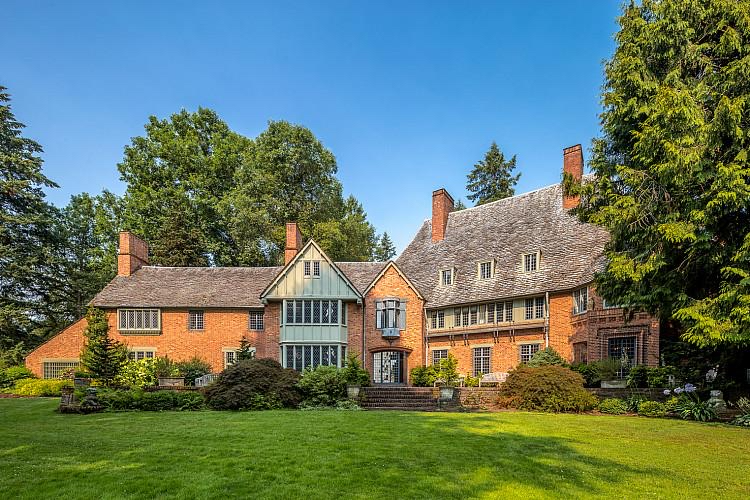
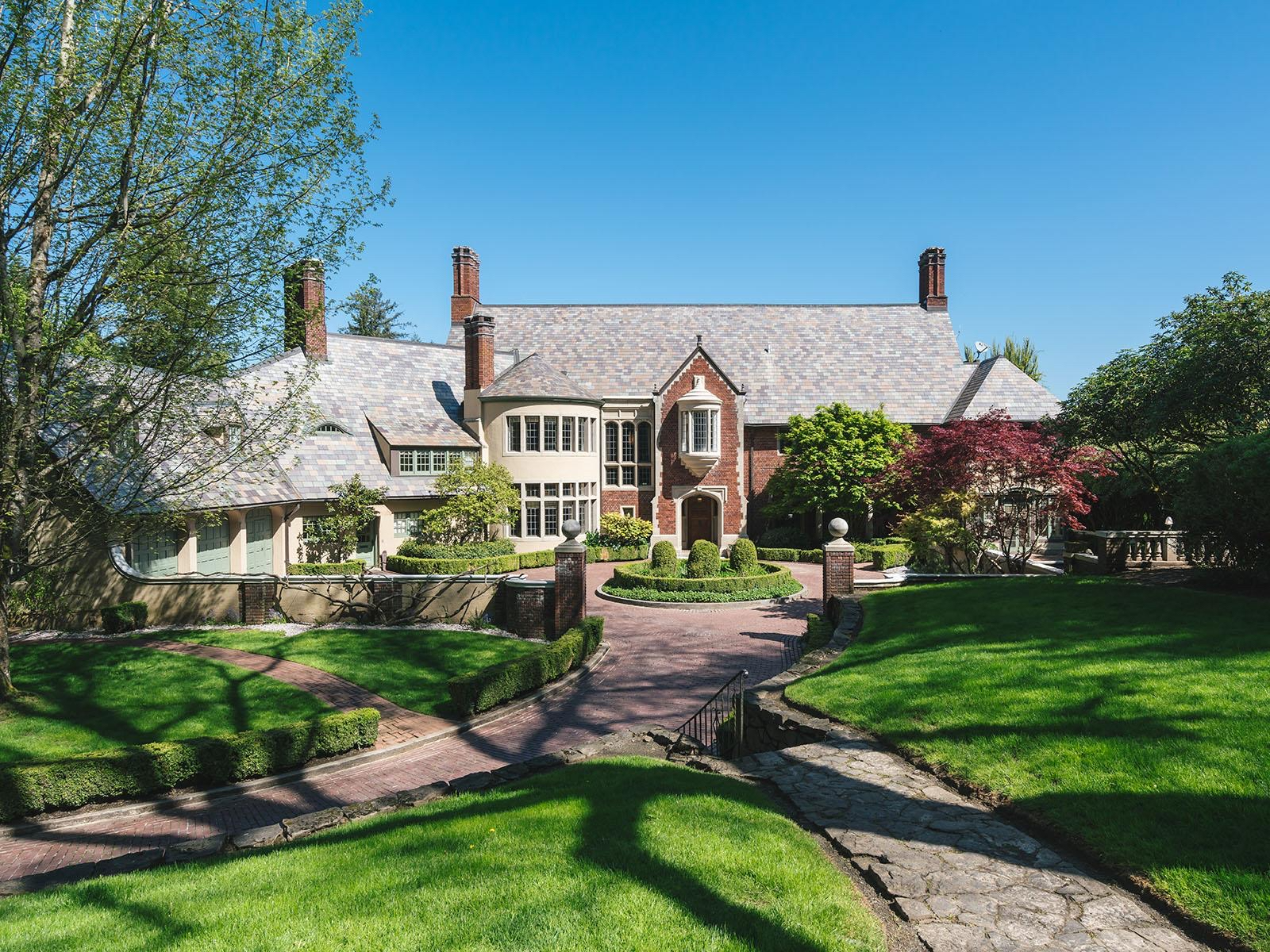
2. Frank J. and Maude Louise Cobbs HouseAddress: 2424 SW Montgomery Drive, Portland, OR 97201 Set high above downtown Portland, the Frank J. and Maude Louise Cobbs House is one of the city's most recognizable private estates. Frank J. Cobbs made his fortune in Oregon's timber industry, including extensive operations in the Siletz River Basin, and commissioned architect Albert E. Doyle to design what would become his family's home. At approximately 14,300 square feet, it remains the largest residence Doyle ever designed and is widely considered one of Oregon's finest examples of Jacobethan Revival architecture. The home sits on roughly two acres in Portland Heights with sweeping views of downtown Portland, Mount Hood, and Mount St. Helens. Original features include leaded-glass casement windows, an oriel window above the entrance, fluted chimneys, formal gardens, and richly detailed brickwork. Over the years, the property has been updated with a theater, bar, swimming pool, sports court, and greenhouse while preserving its historic character. Fun Fact
Along with all its historic grandeur, the property also includes an indoor skateboard ramp. |
Photo by Visitor7, via Wikimedia Commons, licensed under CC BY-SA. |
|
Photo by Visitor7, via Wikimedia Commons, licensed under CC BY-SA 3.0. |
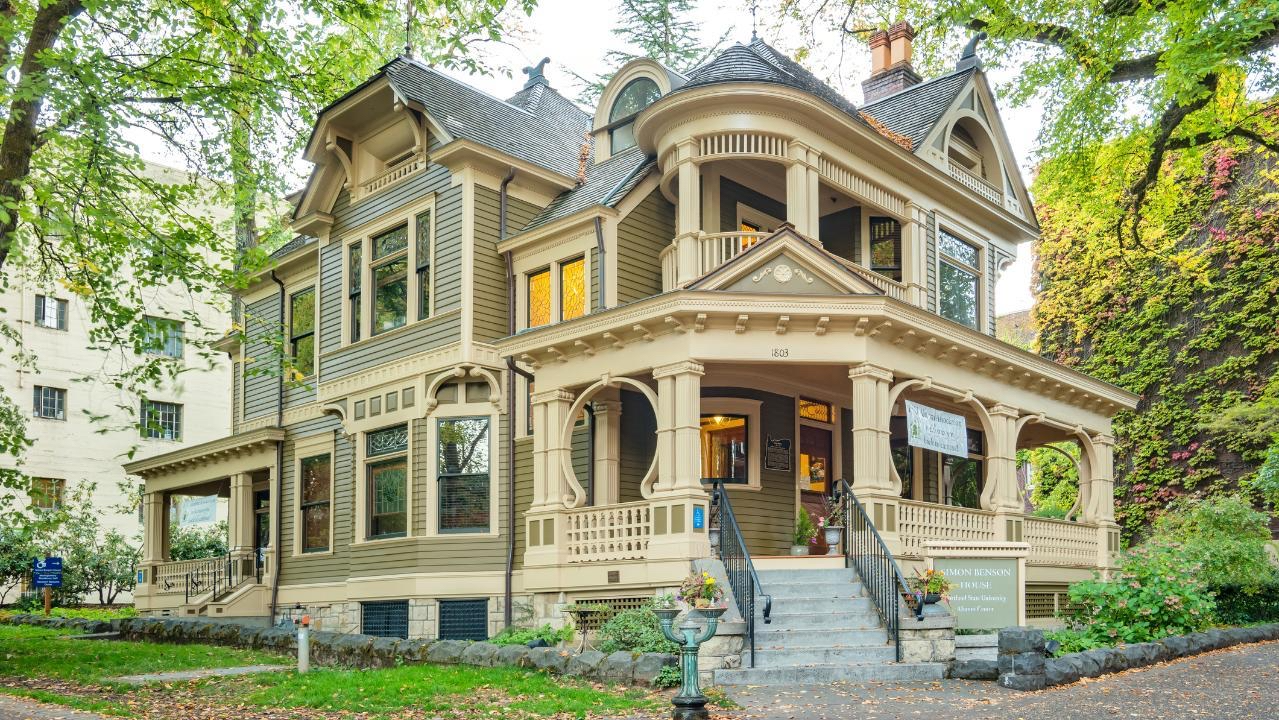
3. Simon Benson HouseAddress: 1803 SW Park Avenue, Portland, OR 97201 Simon Benson arrived in the United States from Norway with very little and eventually built one of Oregon's largest timber fortunes. His influence on Portland can still be seen today through the Benson Hotel, Benson Polytechnic High School, and the Benson Bubblers that still provide drinking water throughout downtown. His Queen Anne residence originally stood at Southwest 11th Avenue and Clay Street across from the Old Church. By the 1990s, the home had been condemned. Rather than lose it, the Friends of Simon Benson House organized a fundraising campaign to relocate and restore the building. In 2000, the entire house was carefully lifted and moved about three blocks to its current location along the Portland State University Park Blocks, where it now serves as the university's Alumni Center. Fun Fact
Benson reportedly became frustrated that his loggers spent too much time in Portland saloons. To encourage them to drink water instead, he funded the installation of public drinking fountains. More than a century later, the Benson Bubblers remain one of Portland's most recognizable landmarks. |
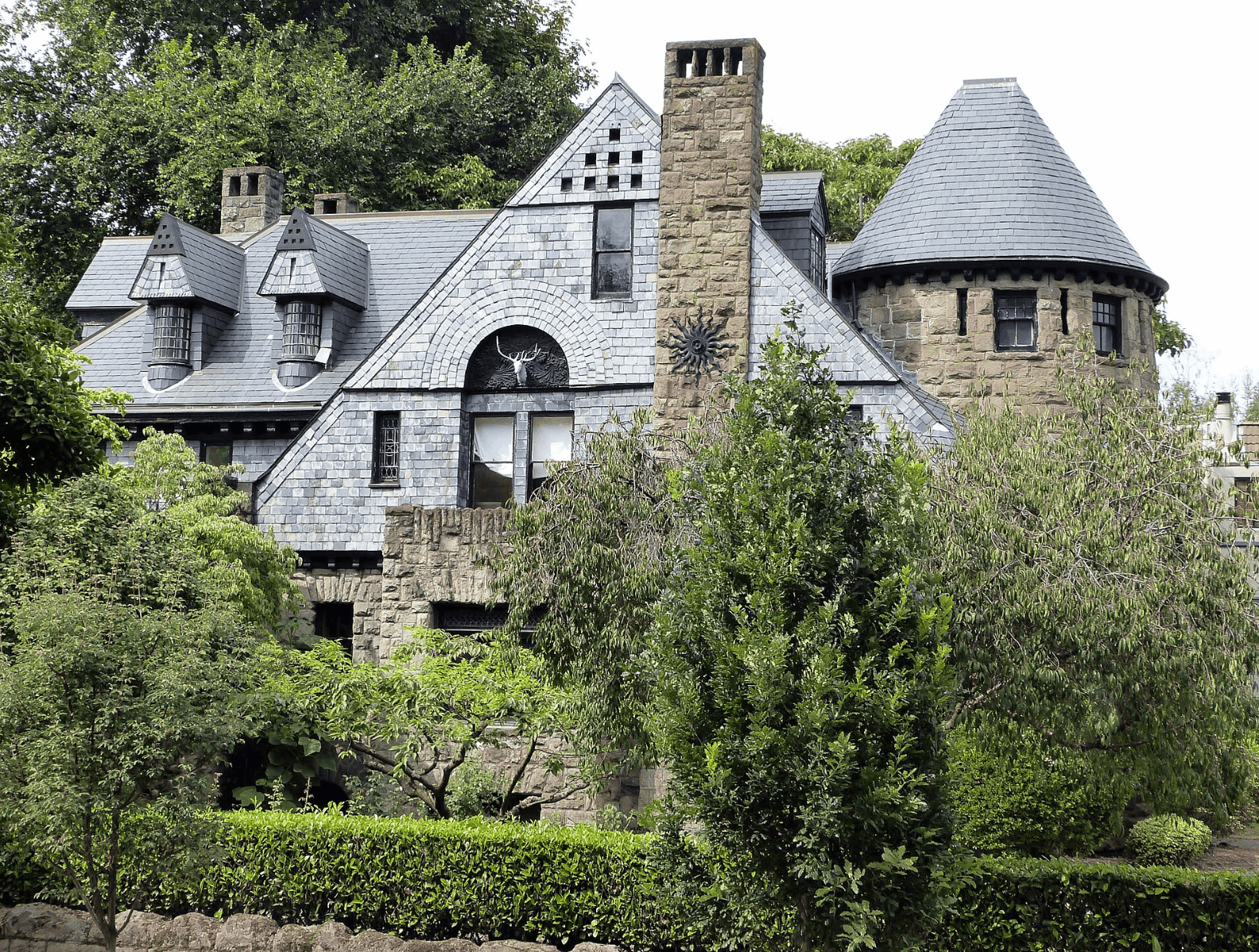
4. Dr. K.A.J. and Cora MacKenzie HouseAddress: 615 NW 20th Avenue, Portland, OR 97209 Walking through Portland's Alphabet Historic District, it's hard to miss what looks more like a stone castle than a family home. Built for prominent surgeon Dr. Kenneth A. J. MacKenzie and his wife, Cora, the residence remains one of Portland's most distinctive historic landmarks. Dr. MacKenzie played a major role in advancing medical education in Oregon and helped lay the foundation for what would eventually become Oregon Health & Science University. Architects McCaw & Martin designed the three-story home with massive stone walls, a rounded tower, dramatic rooflines, terraces, bay windows, and detailed Romanesque architecture. Today, the building continues to serve the community as the longtime home of the William Temple House, preserving both its architecture and its tradition of public service. Fun Fact
The MacKenzie House is widely believed to be Portland's first residence built entirely of stone. |
|
|
|
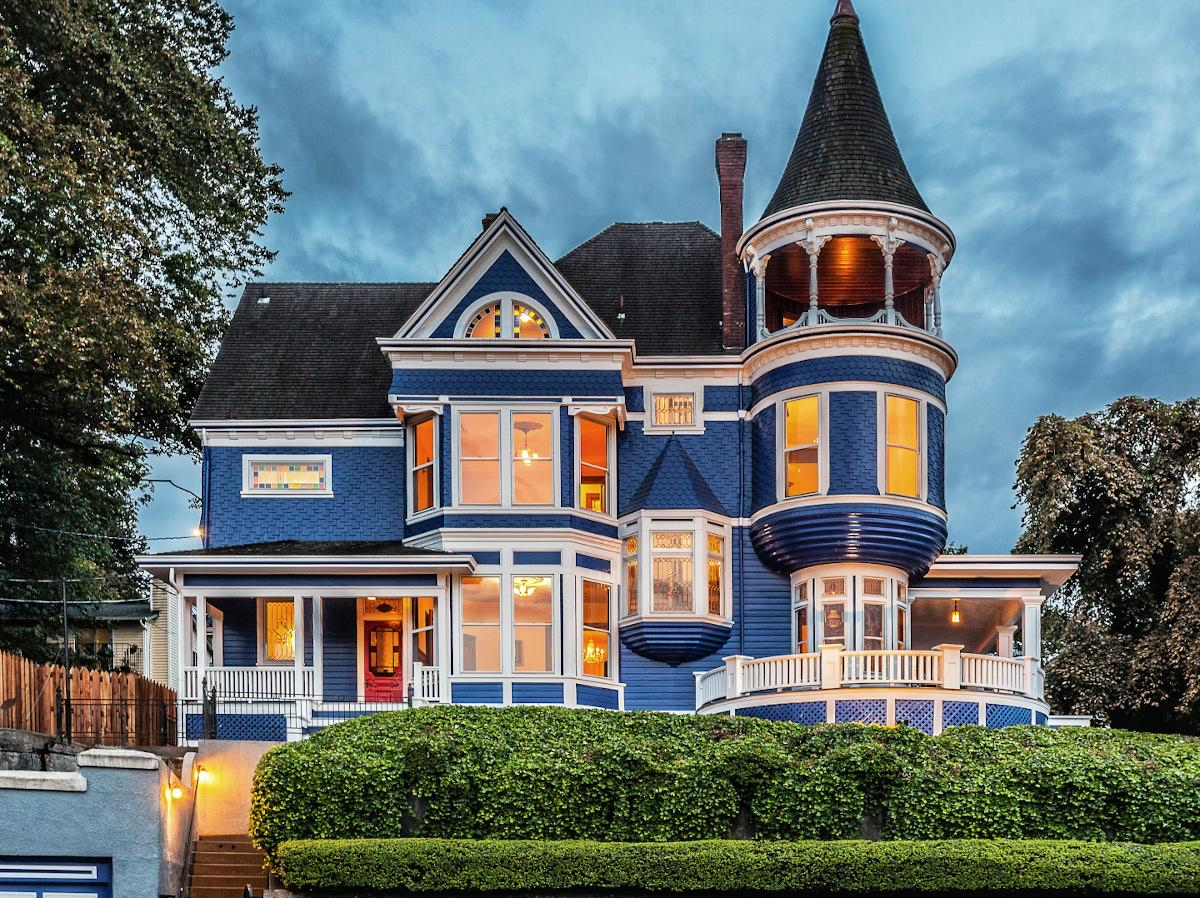
5. Johan Poulsen HouseAddress: 3040 SE McLoughlin Boulevard, Portland, OR 97202 High above the east side, with clear views toward downtown Portland and the Willamette River, the Johan Poulsen House is one of the city's most recognizable Victorian homes. Poulsen was a leading figure in Portland's lumber industry, and his residence reflected both his success and the craftsmanship of the era. The home features nine bedrooms, twelve-foot ceilings, a nearly fifty-foot turret with curved leaded-glass windows, intricate woodwork, and one of Portland's finest collections of original Queen Anne detailing. Standing near the front entrance is a Camperdown elm believed to be the oldest and largest of its kind in Oregon. Fun Fact
The home later became known as "The King's Castle" after bakery owner A.A. Hoover, better known around Portland as the "Doughnut King." |
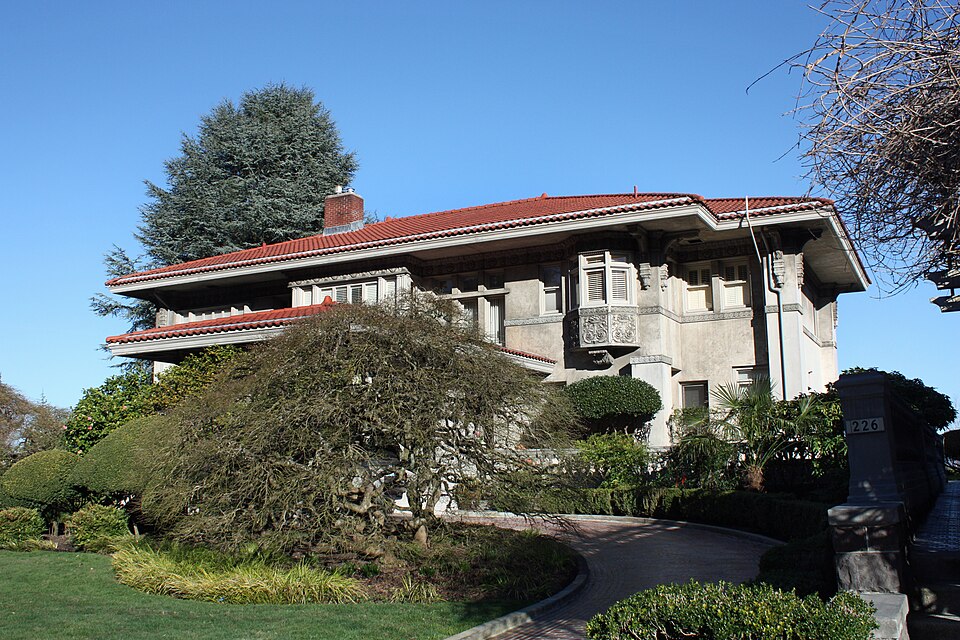
6. A. H. Maegly HouseAddress: 226 SW Kingston Avenue, Portland, OR 97205 The A. H. Maegly House stands apart from many of Portland's older estates. Instead of turrets, towers, and elaborate Victorian ornamentation, it embraces the clean horizontal lines and restrained design that define Prairie School architecture. Designed during the height of Frank Lloyd Wright's influence, the home emphasizes broad rooflines, terraces, and a strong visual connection between the building and its landscape. It remains one of Oregon's finest surviving examples of Prairie School residential design. Its understated look was a dramatic departure from the ornate homes being built throughout Portland at the time. That contrast is part of what makes it one of the city's most architecturally significant residences. Fun Fact
The house was built using stuccoed reinforced concrete, an uncommon construction method for Portland homes at the time. |
|
|
|
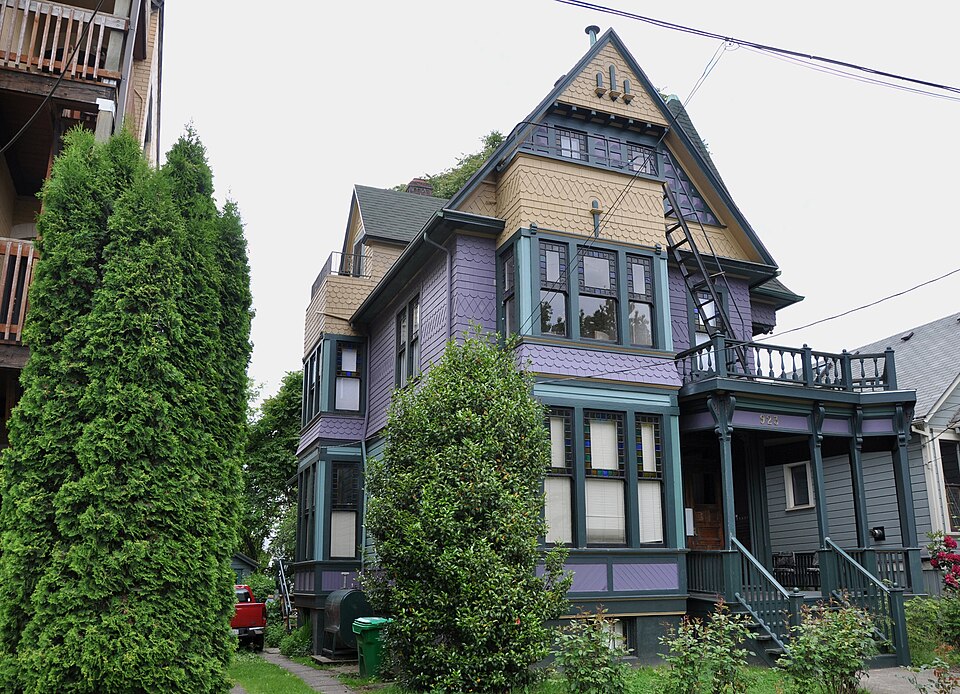
7. W. S. Salmon HouseAddress: 923 SE 13th Avenue, Portland, OR 97214 William S. Salmon, co-owner of the Albina Sash and Door Company, built this Queen Anne residence during Portland's rapid eastside expansion. Decorative shingles, projecting bays, asymmetrical shape, and intricate Victorian detailing make it a classic example of the period. Originally located at Southeast 13th Avenue and Morrison Street, the house was moved about a block and a half south in 1913 to accommodate new development. Sometime after 1900, it was converted from a single-family residence into apartments, a change that likely helped preserve the building while many similar Victorian homes disappeared. Today, it remains one of the best surviving examples of Portland's late nineteenth-century residential architecture and a reminder of the city's early building boom. Fun Fact
As a manufacturer of doors, windows, and millwork, Salmon's own home served as an impressive showcase for the craftsmanship his company produced. |
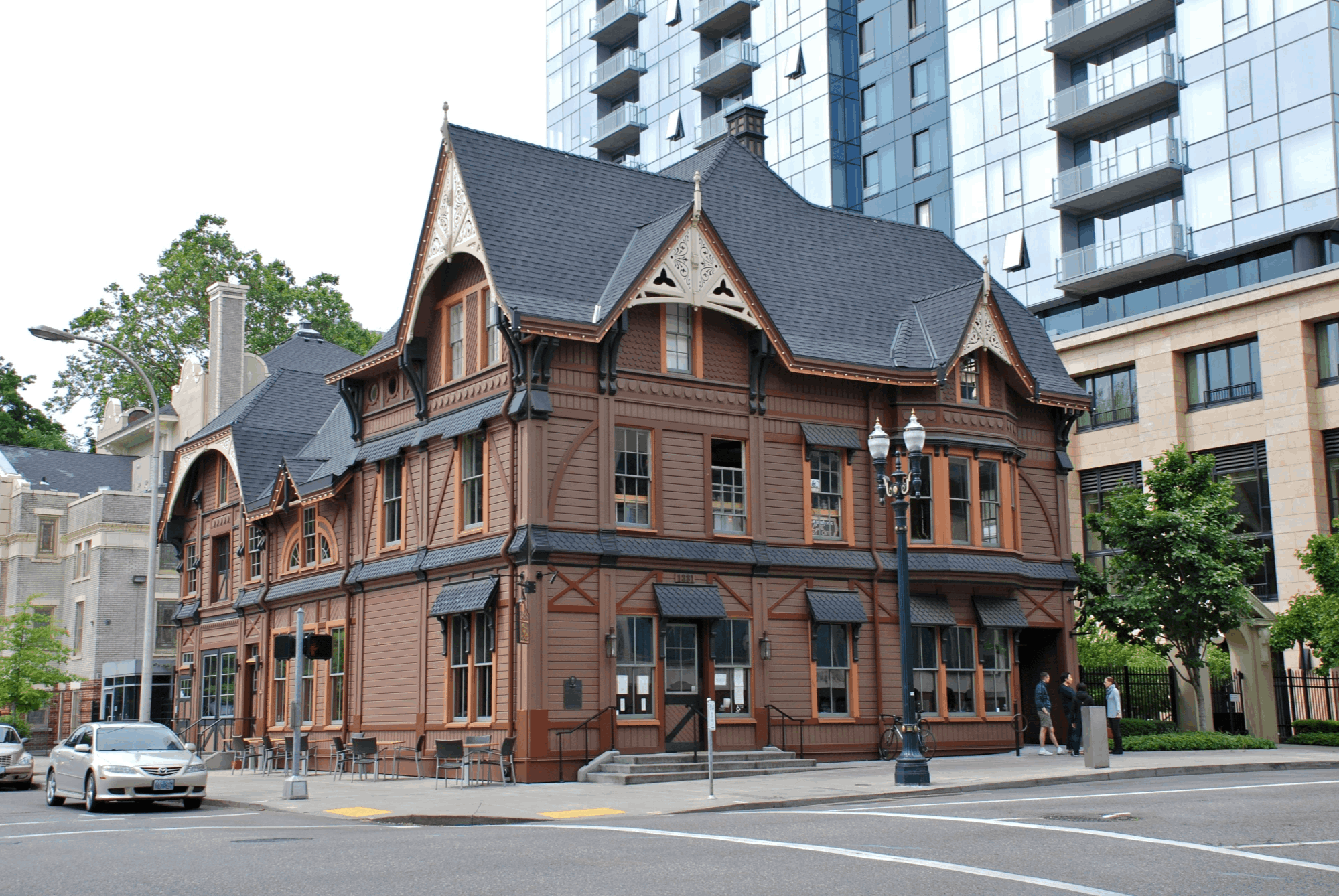
8. Ladd Carriage HouseAddress: 1331 SW Broadway, Portland, OR 97201 The Ladd Carriage House is one of the few remaining reminders of the residential neighborhood that once occupied downtown Portland. Built for banker, businessman, and philanthropist William S. Ladd, the structure originally served as the coach house and stables for the nearby Ladd Mansion. When Ladd Tower was constructed in the early 2000s, preservationists had a real problem on their hands. Rather than demolish the historic building, engineers carefully lifted the 350-ton structure, moved it into temporary storage, and later returned it to nearly the same location after construction was complete. Today, the carriage house remains one of the last surviving pieces of Portland's once-grand downtown estates. Fun Fact
During its relocation, the building squeezed between nearby structures with less than one foot of clearance. |
|
|
|
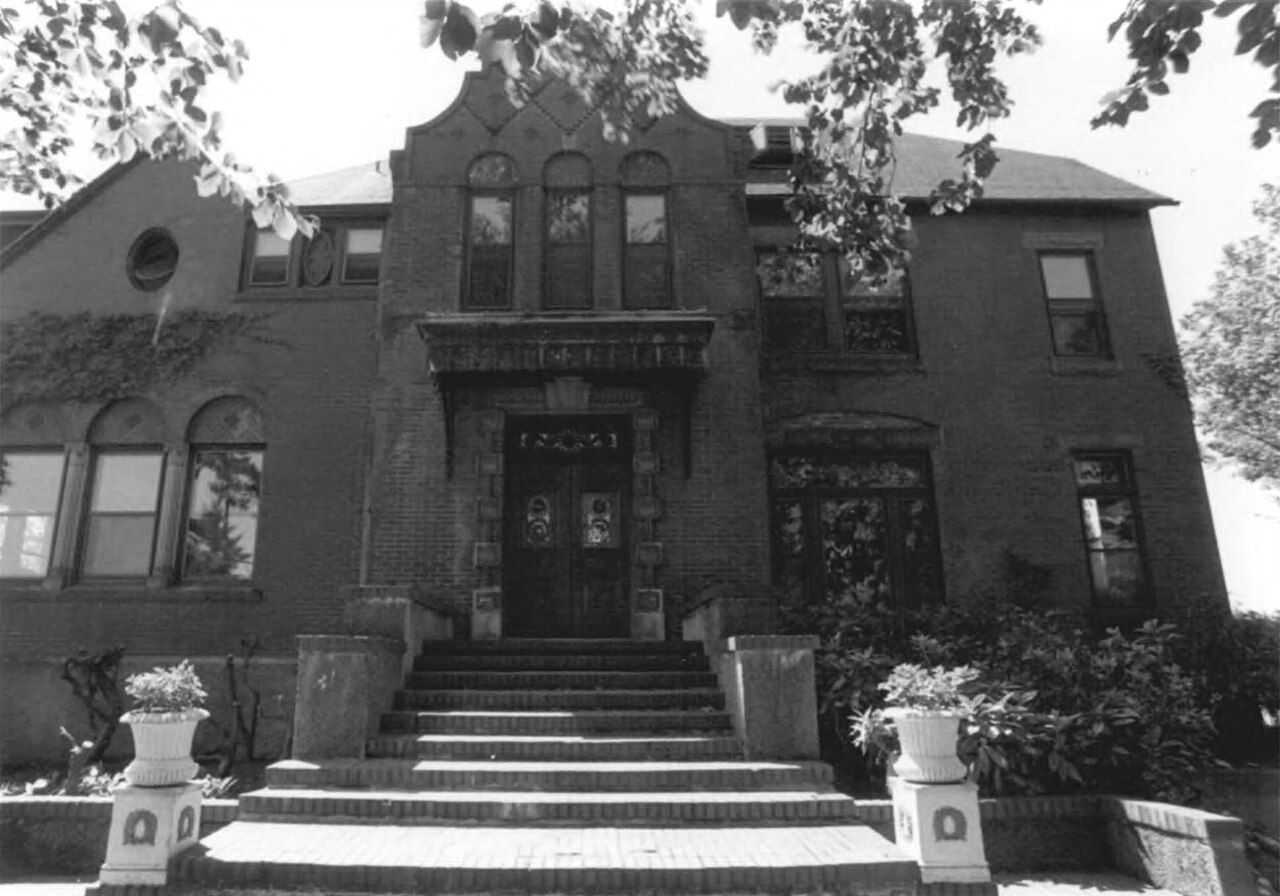
9. Markle-Pittock HouseAddress: 1816 SW Hawthorne Terrace, Portland, OR 97201 When it was completed in 1889, this estate was considered one of Portland's largest and most impressive private residences. It was originally commissioned by J. Carroll McCaffrey, the developer responsible for the cable railway that helped open Portland Heights to residential development. Ownership later passed to financier George Markle and eventually to the family of Frederick Pittock, the only son of Henry and Georgiana Pittock. In 1928, architects Jacobberger & Smith transformed the exterior into the Jacobethan Revival home seen today while preserving much of the original Queen Anne interior. Fun Fact
The home includes a ballroom, swimming pool, and six-car garage. When it was built, The Oregonian noted that it stood at a higher elevation than any other residence near Portland. |
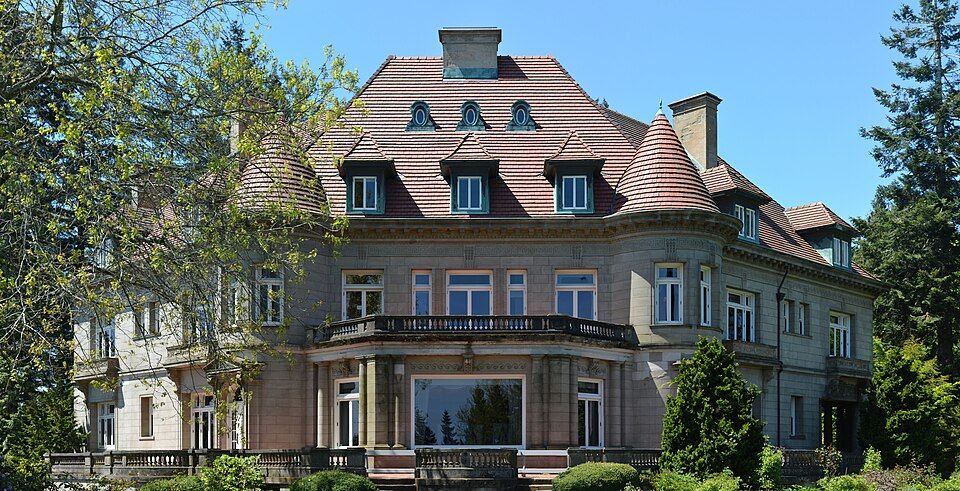
10. Pittock MansionAddress: 3229 NW Pittock Drive, Portland, OR 97210 No list of Portland's historic homes would be complete without Pittock Mansion. Newspaper publisher Henry Pittock and his wife, Georgiana, built the 46-room, 16,000-square-foot estate high above Portland, where it still overlooks the city more than a century later. Designed by architect Edward T. Foulkes and constructed of Tenino sandstone, the mansion incorporated remarkable technology for its time, including an elevator, central vacuum system, intercoms, indirect lighting, and a walk-in refrigeration room. After suffering extensive damage during the Columbus Day Storm of 1962, the mansion narrowly escaped demolition. Community fundraising efforts helped the City of Portland purchase the property in 1964, and it opened as a public museum the following year. Today it remains one of Portland's most visited historic landmarks. Fun Fact
Pittock Mansion has appeared in several films, including Body of Evidence, and served as the finish line for Season 13 of The Amazing Race. |
|
|
|
|
Portland's history isn't limited to museums or plaques on the sidewalk. It's woven into neighborhoods, preserved in remarkable homes, and reflected in the lives of the people who helped shape the city. Whether you're an architecture enthusiast, a history buff, or simply curious about Portland's past, these homes offer a glimpse into a different era that still exists today if you know where to look.
By Cassidy Campanian | July 2026
Details in this post come from public records, Wikipedia, and historical sources. Information is believed to be reliable but not guaranteed.
Categories
Recent Posts